Hearth and Hamlet Progression Guide: Town to Kingdom
Advance from a stable town to a complete kingdom by managing upgrades, research, workers, trade, magic, and late-game bottlenecks.
Quick answer
- Advance when Food stays positive, workers remain flexible, and storage can hold the next major cost.
- Buy the upgrade that removes the current limit, then rebuild the production used to pay for it.
- Use research, laws, trade, and magic as new economic layers instead of opening every branch at once.
- Judge completion by a resilient kingdom economy, not by one final purchase.
Hearth and Hamlet - Moving Towards Independence - Episode 2
Watch a release-day settlement balance town upgrades, storage, research, trade, magic, and worker assignments while moving toward independence.
Continue reading
These related Hearth and Hamlet pages answer the next questions around this topic.
Use Five Readiness Milestones
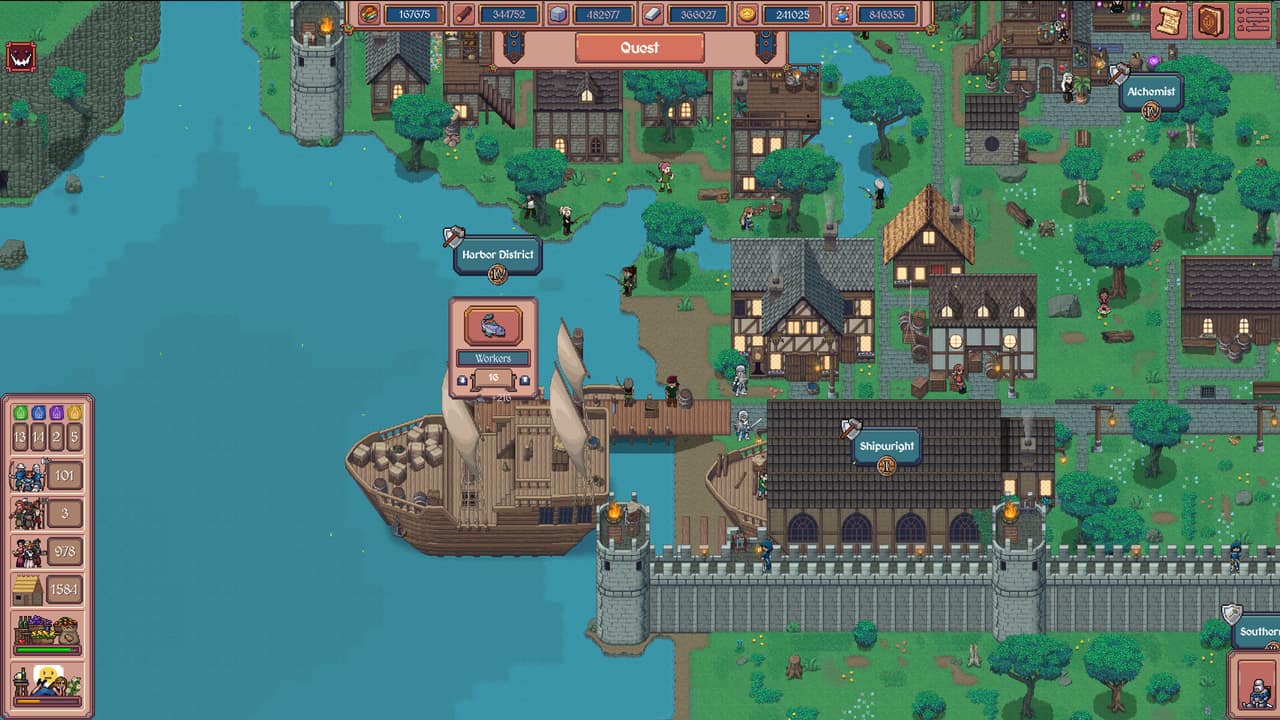
The most reliable Hearth and Hamlet progression route starts after Food and Wood are automated. From there, advance only when the current economy can pay for a major upgrade and recover afterward. The useful milestones are stable automation, expandable production, permanent research, government and trade, then magic and a protected kingdom.
| Milestone | Readiness check | Main goal |
|---|---|---|
| Stable town | Food remains safe while workers gather construction resources | Stop relying on constant manual gathering |
| Expandable economy | Housing and storage have room for the next project | Add workers and hold larger upgrade costs |
| Research network | Building upgrades expose useful permanent research | Unlock the capability that removes the next constraint |
| Governed realm | Core production survives policy changes and trade preparation | Add income and imported resources without starving local production |
| Developed kingdom | Advanced buildings, magic, trade, and defense operate together | Keep every major system funded and recover after large purchases |
These milestones are readiness checks, not fixed resource totals. Current costs can change with balance updates, while the same decision remains useful: solve the limit that prevents the next system from working.
Prioritize the Upgrade That Removes the Current Limit
Read the next objective or desired unlock before spending. If the requirement exceeds storage, increase capacity. If production is too slow, improve that resource line or move a small group of workers. If no workers are free, add housing or release labor from a capped resource. If the needed option is still hidden, inspect the research attached to existing buildings.
- Choose one next objective, such as a settlement upgrade, research unlock, trade project, or advanced building.
- List the blocking requirement: production, storage, housing, workers, prerequisite research, or defense.
- Move workers in small groups toward the required resource while keeping Food positive.
- Buy the capacity or unlock that clears the identified limit.
- Restore the production lines used for the purchase before starting another major project.
Avoid spreading resources across every visible upgrade. A broad set of half-funded projects delays all of them. Spend for the next unlocked capability, then rebuild the economy that paid for it.
Treat New Systems as Progression Gates
Research is the bridge between settlement tiers. Upgraded buildings expose permanent technologies, and those technologies open advanced buildings, policies, upgrades, and magic. Prioritize research that creates a new capability or removes a current cap before buying a small bonus with no immediate job.
Laws and policies tune the economy that already exists. Review the Food trend, worker availability, and recurring costs before changing taxation, worker rules, or guard drafts. A policy is ready when its benefit can run without breaking the production layer below it.
Trade expands resource access beyond local production. Enter that stage with spare output and enough storage to receive useful goods. If trade consumes a resource needed for the next settlement upgrade, reduce its scale until local growth is stable again.
When independence or another political objective becomes the next story milestone, treat it as a reserve check. Finish the immediate prerequisites, keep basic resources climbing, and leave workers available for whatever the new phase introduces. Magic follows the same rule: unlock an alchemical or academic branch when the supporting economy can fund it without pausing the entire town.
Recover From Mid-Game and Late-Game Stalls
A late-game stall is usually a chain of caps, not a shortage of clicks. Diagnose it in the same order every time.
| Symptom | Likely constraint | Recovery move |
|---|---|---|
| A required resource barely grows | Too few workers or high consumption | Move a small group from a capped or less urgent line |
| Production stops at a full bar | Storage capacity | Buy storage before adding more workers |
| No labor is available | Housing or overassignment | Expand housing or pull workers from surplus production |
| The next building stays hidden | Missing research or building upgrade | Inspect research on existing structures and follow the prerequisite chain |
| A major purchase empties everything | Expansion pace is too fast | Pause new projects until Food and construction resources recover |
| Trade, magic, or defense drains the town | Advanced systems opened too early | Scale one system back and stabilize the base economy first |
Change one constraint at a time, then watch the resource trend. Several simultaneous worker moves hide the cause of the stall and make recovery harder to measure.
Know When the Kingdom Is Fully Developed
The game supports an open-ended growth path, so use a practical completion checklist. Your kingdom is mature when the systems you chose can operate together, not when one resource total looks large.
- Desired permanent research and building branches are unlocked.
- Housing, storage, and worker capacity no longer block routine projects.
- Laws and policies support the economy you want to run.
- Trade supplies useful resources without consuming every local surplus.
- Chosen magic buildings and upgrades have a sustainable input economy.
- Soldiers and fortifications are funded without collapsing civilian production.
- The settlement can make a major purchase and return to positive growth.
After reaching that point, remaining upgrades are optimization goals. Improve the slowest active system, finish optional branches, and keep enough flexibility to absorb a new research, trade, magic, or defense demand.